Designing a Gamified High-Five Interaction to Increase Engagement in Student Teams
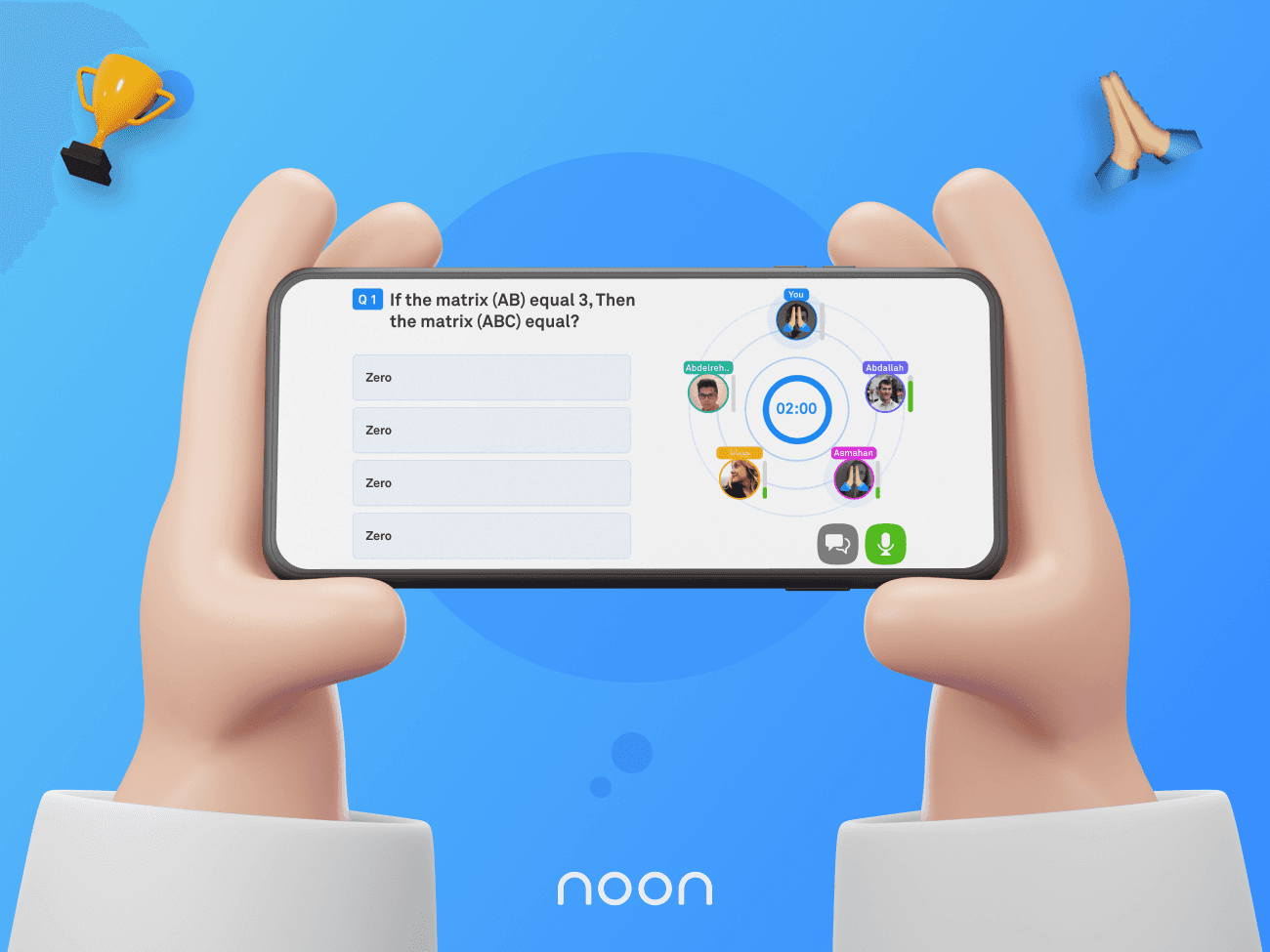
The High-Five Interaction is a lightweight gamification feature designed for Noon Academy to increase peer-to-peer engagement during breakout team discussions. The feature allows students to express appreciation and encouragement through a playful, limited high-five interaction—reinforcing positive behavior and motivating quieter students to participate.
After launching the Breakout Teams experience, data revealed that only 50% of students actively interacted with their teammates. While the core social learning flow was effective, students lacked a simple, expressive way to acknowledge effort, reward helpful peers, and feel socially connected.
My Role | Product Design Lead
I led research, interaction design, UX writing, prototyping, and developer handoff for this feature—working closely with product and engineering teams.
———
The Challenge
Only 50% of students actively used voice or discussion tools
Silent students lacked motivation to engage
No lightweight social feedback mechanism existed
Needed to increase engagement to 70%+ without disrupting live sessions

The Solution
We introduced a gamified high-five interaction as a social reward mechanism.
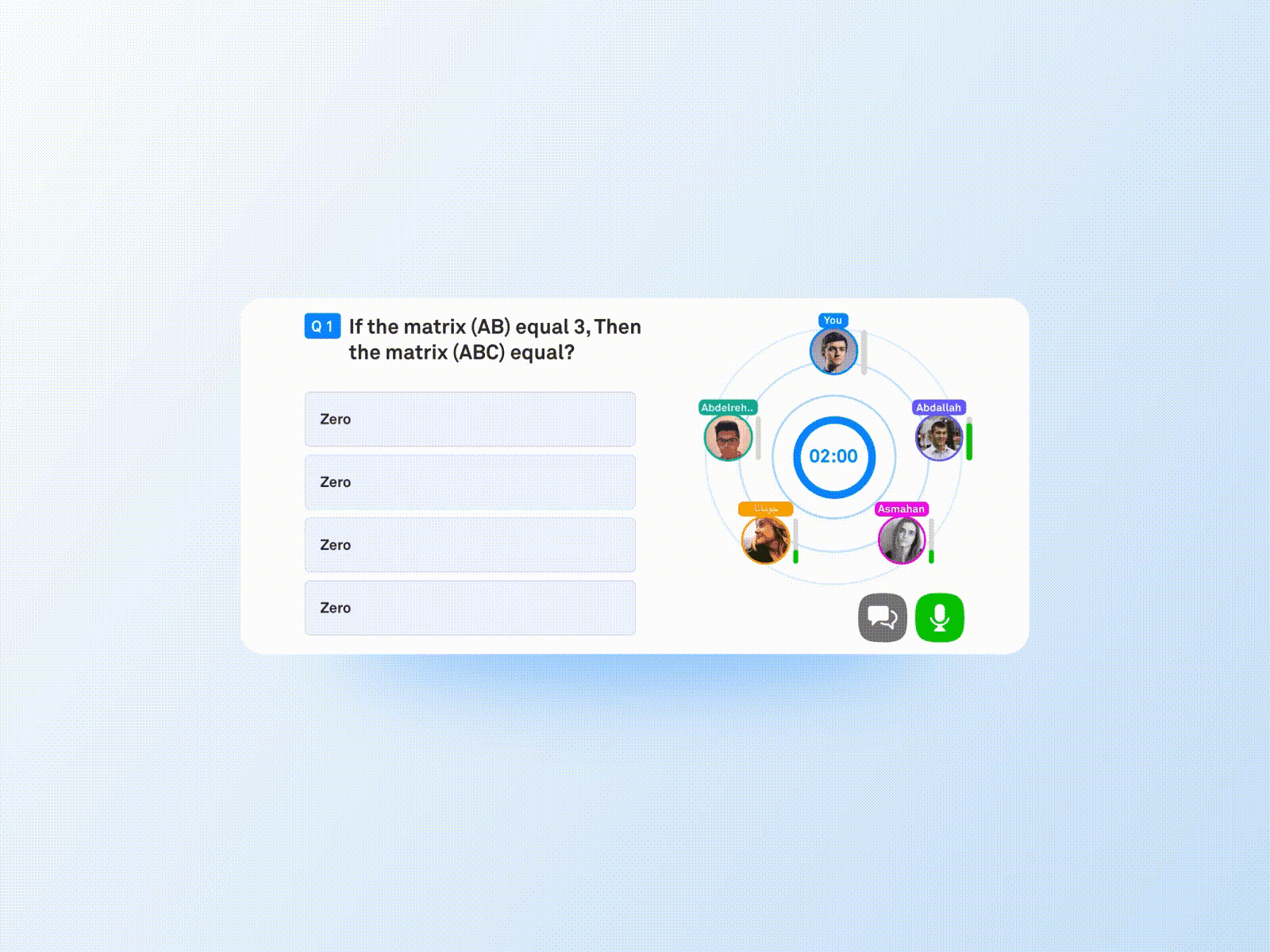
Students can send a high-five to teammates during breakout discussions to say “thanks”, “good job”, or “nice answer”. The interaction is intentionally limited—one high-five per teammate per question—to keep it meaningful rather than spammy.
By combining animation, visibility, and playful constraints, the feature reinforces helpful behavior and encourages quieter students to participate.
How it works
Tap a teammate’s avatar → send High-Five 🙏🏼
Each student has a visible high-five counter
One high-five per teammate per question
Self high-fives are blocked with a humorous message 😅
Outcome
Noticeable increase in student participation during breakout discussions
Strong positive emotional response from students
Peer appreciation became part of the learning culture
Feature continues to be iterated alongside other engagement mechanics